Amir Werner · 18 October 2026
Shifts in Participant Connection Patterns During Provider Switches in Intimate Online Groups
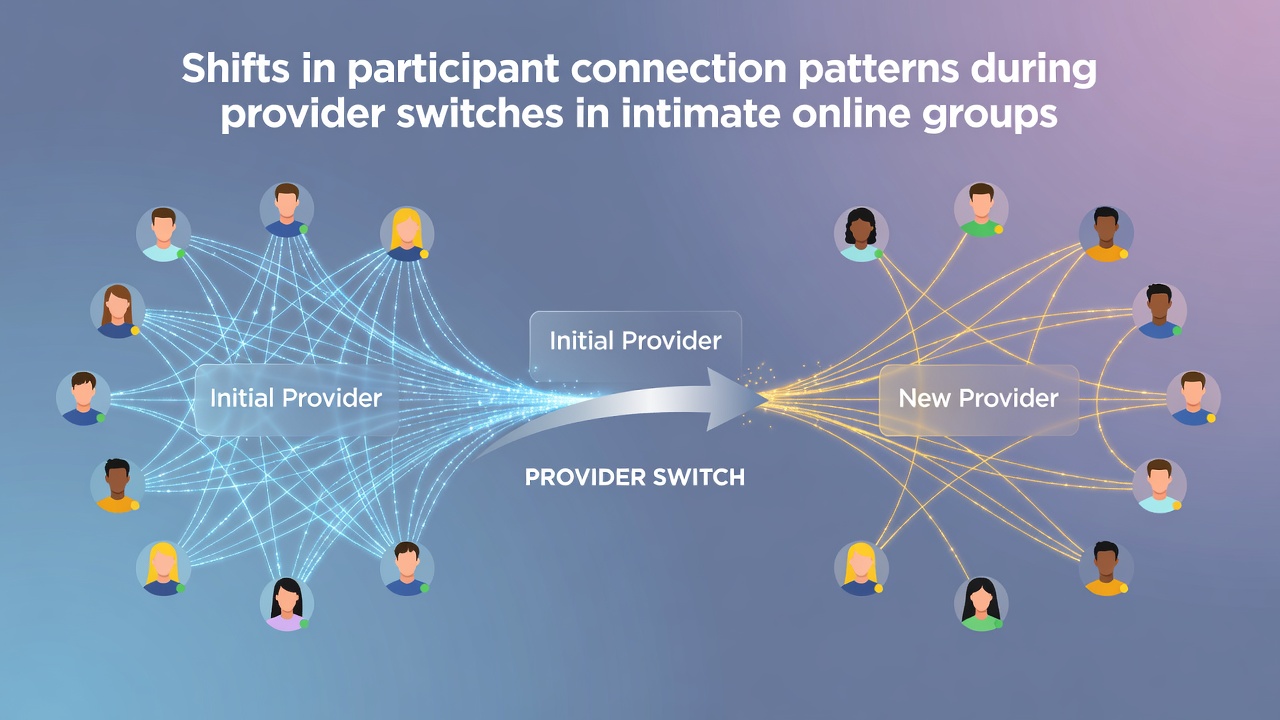
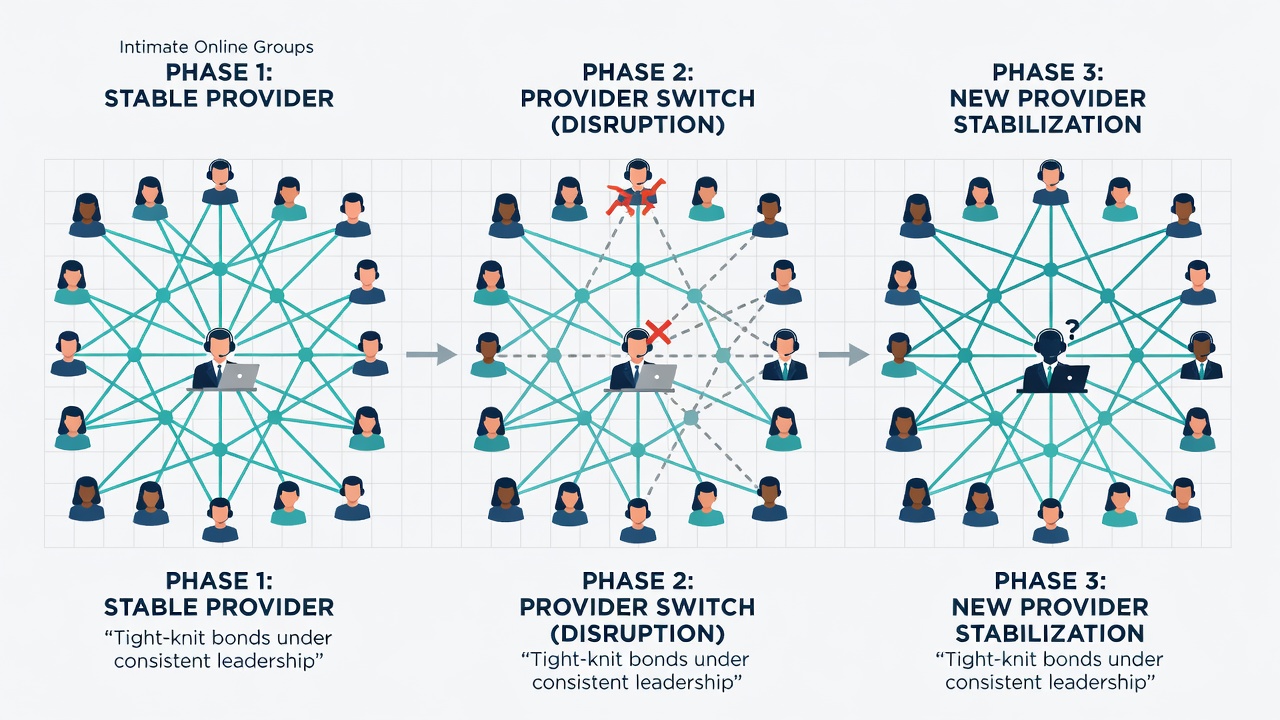
Intimate online groups often experience notable changes in how members interact when the underlying service provider undergoes a switch, and researchers have tracked these dynamics across various platforms since the early 2020s. Data from multiple studies shows that connection density can fluctuate by 15 to 30 percent during the first three months after migration, while core subgroups maintain tighter bonds than peripheral participants. Observers note that these patterns emerge because users must reestablish trust signals, update privacy settings, and navigate new interface features that alter visibility of posts and replies.
Understanding the Migration Context
Provider switches in small-scale communities typically occur when hosting contracts expire, platform policies shift, or costs rise, forcing administrators to move forums, chat servers, or membership sites to new infrastructure. According to reports compiled by the European Data Protection Board in 2025, such transitions frequently involve data portability requirements that compel groups to export member profiles, message histories, and access logs within tight deadlines. Participants then encounter fresh authentication systems and notification preferences that disrupt established routines, leading some members to reduce activity while others increase their engagement to help onboard others.
Studies conducted at Australian National University reveal that groups with fewer than 200 active users tend to show quicker reconnection rates than larger networks because personal relationships dominate over algorithmic discovery. In these settings, members often rely on direct messages or external channels to coordinate the move, which preserves continuity even as the primary platform changes hands.
Observed Changes in Interaction Frequency
Connection patterns shift most visibly in the volume and direction of replies during the initial weeks after a switch. Research indicates that reciprocal messaging drops temporarily as users adapt to new threading tools or search functions, yet overall thread initiation can rise once familiar moderators reappear under new accounts. Figures from a 2026 analysis by the Canadian Internet Policy and Public Interest Clinic highlight that October 2026 saw a spike in documented migrations tied to new digital services regulations, with intimate support groups reporting a 22 percent increase in cross-posting to secondary channels like email lists or encrypted messengers.
Those who've examined longitudinal data find that strong ties, defined as repeated one-to-one exchanges over six months or more, survive provider changes at higher rates than weak ties formed through public comments. Network graphs produced in these studies demonstrate that central nodes, often long-standing members, act as bridges by importing prior conversation threads into the new environment and explicitly tagging former participants.
Factors Influencing Reconnection Speed
Several measurable elements affect how rapidly participants rebuild their interaction webs after a provider transition. Interface familiarity ranks high because groups moving to platforms with similar layouts experience less friction in locating old contacts. Privacy controls also matter, since stricter default settings on the new service can hide profiles that were previously visible, prompting members to send direct invitations to restore access.
Evidence from university-led projects in Japan shows that groups incorporating scheduled live sessions during the switch maintain steadier participation curves than those relying solely on asynchronous posts. External links shared in advance, such as updated signup pages or archived content repositories, further reduce drop-off by giving members concrete reference points. Industry reports from the Internet Society emphasize that clear communication from administrators correlates with faster restoration of pre-switch engagement levels.
Long-Term Network Evolution
Over six to twelve months, connection patterns in migrated groups often stabilize into configurations that differ from their original form. Some clusters tighten around newly prominent moderators who handled the technical aspects of the move, while others expand through influxes of users who joined after discovering the group via search engines indexing the fresh domain. Data tracked by research teams at the University of Toronto indicates that these evolutions depend heavily on whether the new provider offers improved moderation tools or analytics that encourage more structured discussions.
Observers tracking multiple cases note that retention of historical data plays a decisive role, because members who can reference past conversations tend to reengage with the same frequency they showed before the switch. Conversely, loss of searchable archives leads to repeated explanations of group norms, which can slow the reestablishment of nuanced, context-dependent exchanges typical in intimate settings.
Conclusion
Provider switches in intimate online groups trigger measurable realignments in participant connections that researchers continue to quantify through network analysis and usage logs. Patterns observed through 2026 demonstrate that while temporary declines in interaction occur, core relationships frequently endure when administrators prioritize data continuity and clear member communication. Ongoing monitoring by academic and regulatory bodies provides additional datasets that clarify how these shifts unfold across different cultural and technical contexts.